🤯 Late Melatonin, a Sleep-Phase Gene, and Sensory Hyper-Arousal in Autism
by RATH
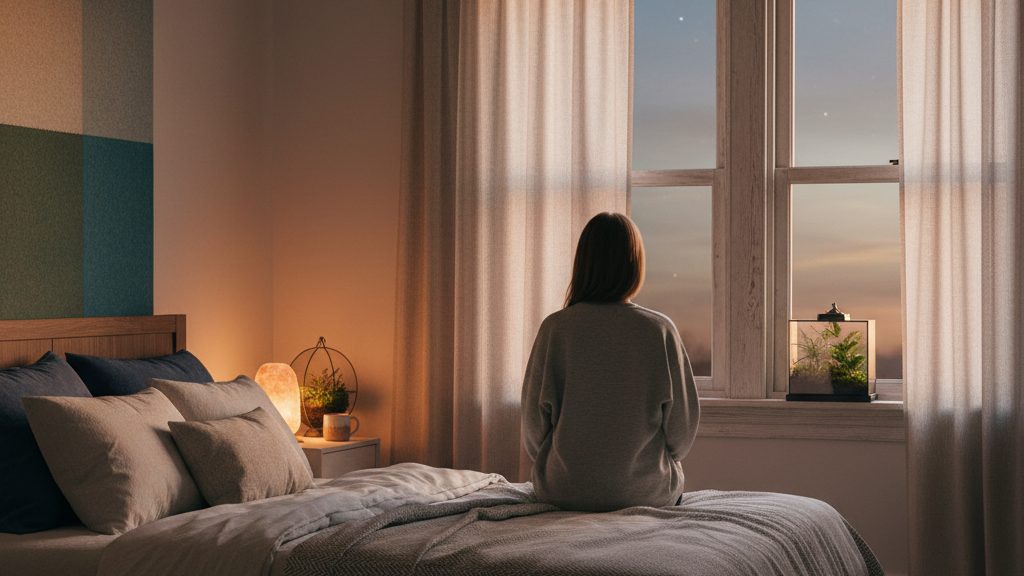
Autism and sleep difficulties meet at several biological systems at once. Nighttime hormones that should cue bedtime, genes that keep the brain’s daily rhythm, and the pathways that decide how much of the environment gets through all leave a mark on when sleep starts and whether it holds. The pieces below follow those systems from hormone timing to neural circuits.
Melatonin that arrives late, then falls too soon
[01] Prepubertal children with autism show later dim light melatonin onset in saliva collected around bedtime than typical peers, and later onsets associate with delayed sleep times in both groups.
[02] Autistic individuals display an earlier decline in melatonin during adolescence after showing delayed onset prepubertally, altering the hormone's typical nighttime rise that cues sleep.
PER2 mutations shared with advanced sleep-phase families
[03] Some autistic individuals carry mutations in PER2, a gene essential for maintaining circadian rhythms in the brain, which also cause familial advanced sleep-phase syndrome with shifted sleep timing.
Sensory sensitivities, thalamic overconnectivity, and a different insomnia
[04] Greater hypersensitivity to touch, assessed by the Caregiver Sensory Profile in 69 autistic children versus 62 typical controls, associates with increased sleep problems in the autism group.
[05] Parent-rated sleep disturbances in children with autism associate with specific sensitivities across auditory, visual and tactile domains as measured on the five Sensory Profile subscales.
[06] Preschoolers with autism experiencing sleep problems display sensory sensitivities together with thalamocortical overconnectivity, circuits that both relay sensory input to cortex and help regulate sleep-wake cycles.
[07] Sensory hyper-arousal to environmental stimuli likely contributes to insomnia in autistic children, extending beyond the cognitive and physiological hyper-arousal models used to explain sleeplessness in the general population.
The night fails at the hormone, the gene, and a sensory gate that will not close.
[sources]
- https://pmc.ncbi.nlm.nih.gov/articles/PMC9237227
- https://www.frontiersin.org/journals/neurology/articles/10.3389/fneur.2022.813692/full
- https://pmc.ncbi.nlm.nih.gov/articles/PMC9237227
- https://www.frontiersin.org/journals/neurology/articles/10.3389/fneur.2022.813692/full
- https://pubmed.ncbi.nlm.nih.gov/33474825
- https://www.biorxiv.org/content/10.1101/255323v1
- https://europepmc.org/article/PPR/PPR19346
- https://molecularautism.biomedcentral.com/articles/10.1186/s13229-018-0206-8
- https://www.sciencedirect.com/science/article/pii/S2451902221002020
- https://pmc.ncbi.nlm.nih.gov/articles/PMC5846201