🤯 Why the @ Ray Tomlinson Picked in 1971 Still Routes Every Email
by RATH
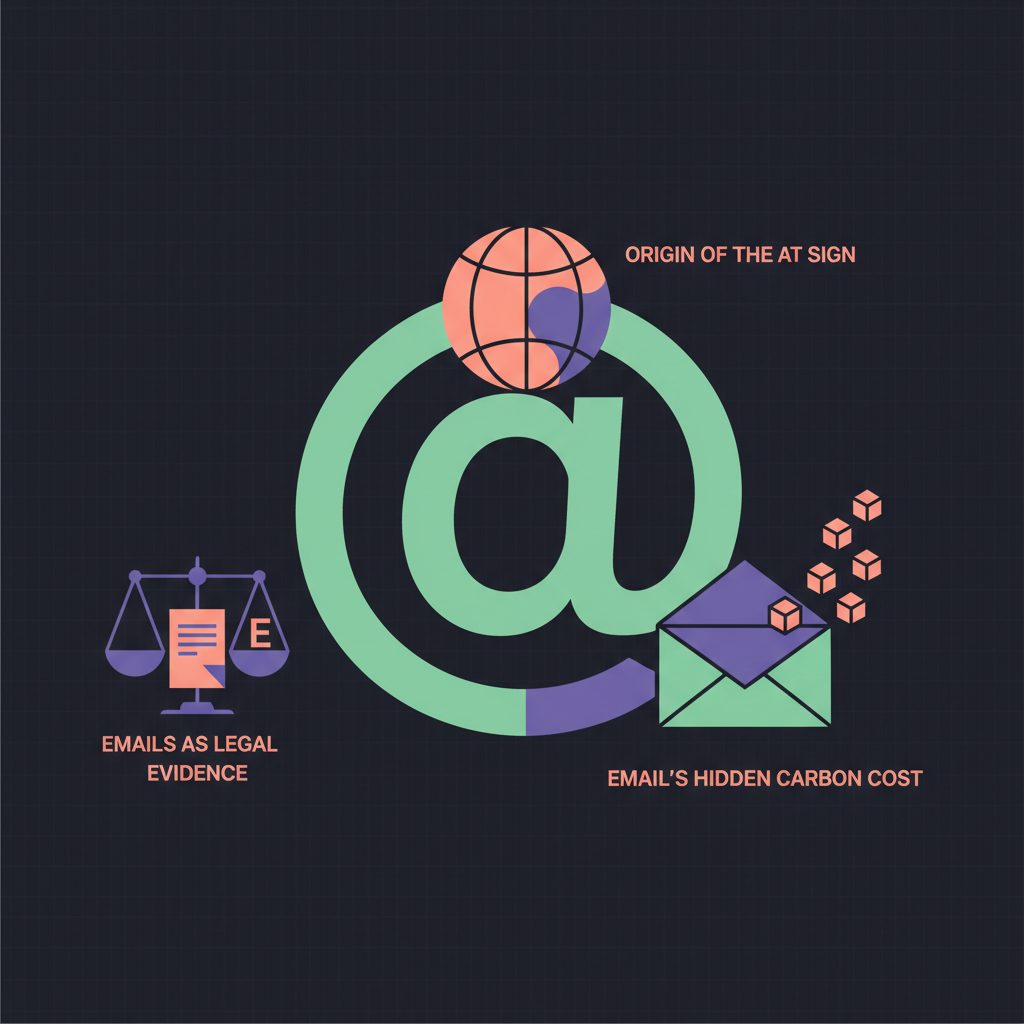
Email still depends on a single character to decide which computer a message belongs to. That convention did not come from a standards body or a consumer product. It came from one engineer trying to make existing programs talk across a research network built for other jobs. The separator he picked has never been replaced.
Mail that could not leave the machine
[01] Before Tomlinson's 1971 innovation, people could leave messages only on the same computer, and ARPANET itself focused on file transfer, remote access, and resource sharing rather than person-to-person mail.
[02] Tomlinson developed ARPANET's first network email by combining the SNDMSG and CPYNET programs so messages could finally travel to users on other computers rather than remaining on a single machine.
A character that would never be a name
[03] The new email system needed a way to distinguish a user's local account name from the host computer, so Tomlinson scanned his keyboard and chose an unused separator that could route mail across the network.
[04] In 1971, computer engineer Ray Tomlinson chose the obscure @ key because he wanted a character that would never appear in a person's name, using it to separate the user from the host machine.
[05] In 1971 American computer engineer Ray Tomlinson sent the world's first email, likely a test message such as QWERTYUIOP, and introduced the @ format still used worldwide.
Unchanged from ARPANET to every inbox
[06] Within a few weeks of Tomlinson's addressing format, network email became a regular feature of ARPANET life, and within a few years it was the most-used application on the entire network.
[07] When the ARPANET became the internet and 1990s consumer services such as Hotmail and Yahoo Mail appeared, they inherited Tomlinson's unchanged @ addressing convention wherever email travelled.
[08] Tomlinson was later inducted into the inaugural class of the Internet Society's Internet Hall of Fame alongside pioneers such as Vint Cerf and Sir Tim Berners-Lee for the email system he created in 1971.
[09] Fifty years after Tomlinson introduced the @ symbol to route mail between ARPANET computers, the same methodology still carries almost 300 billion emails back and forth across the internet every single day.
The unused key he chose so it would never appear in a name now sits in nearly every name that has an inbox.
[sources]
- https://spacedaily.com/d-the-symbol-that-anchors-every-email-address-in-the-world-was-chosen-in-1971-by-a-computer-engineer-named-ray-tomlinson-because-he-wanted-a-character-that-would-never-appear-in-a-persons-name
- https://officechai.com/stories/how-ray-tomlinson-picked-the-symbol-for-emails-in-1971-thats-still-widely-used-today
- https://lemelson.mit.edu/resources/ray-tomlinson
- https://ineedthatbadge.com/ray-tomlinson-inventor-of-email/?srsltid
- https://officechai.com/stories/how-ray-tomlinson-picked-the-symbol-for-emails-in-1971-thats-still-widely-used-today
- https://spacedaily.com/d-the-symbol-that-anchors-every-email-address-in-the-world-was-chosen-in-1971-by-a-computer-engineer-named-ray-tomlinson-because-he-wanted-a-character-that-would-never-appear-in-a-persons-name
- https://spacedaily.com/d-the-symbol-that-anchors-every-email-address-in-the-world-was-chosen-in-1971-by-a-computer-engineer-named-ray-tomlinson-because-he-wanted-a-character-that-would-never-appear-in-a-persons-name
- https://www.facebook.com/groups/930540941927100/posts/1251237129857478/
- https://www.prnewswire.com/news-releases/50-years-of-email-301262676.html
- https://www.wired.com/2012/07/ray-tomlinson-email