🤯 Waiting for the Waiter? You Might Already Be One
by OMG[facts] / Ari
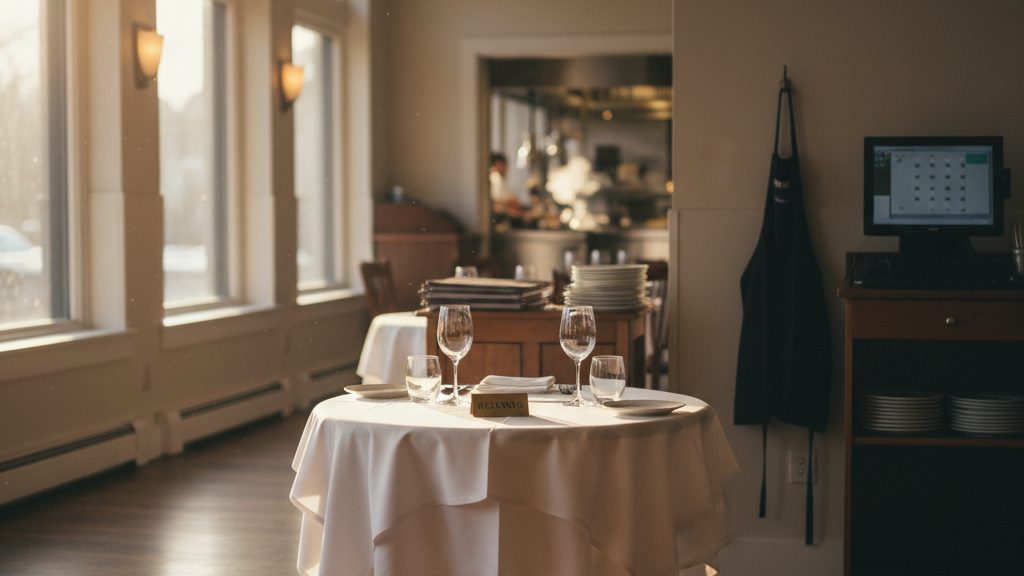
English has long allowed the same word to describe both the person bringing dinner and the person sitting still until it arrives. That overlap is what lets a simple question about becoming the waiter while you wait land as a joke. The rest of the story sits in how the language got there, how the mind processes the collision of meanings, and what actually follows when the wait stretches out.
Watchman, Spy, Then the Person Who Brings the Meal
[01] The word waiter first appeared in late 14th century English as a term for a watchman or spy, derived from Old North French waitier meaning to watch, before shifting to mean a meal attendant in the late 15th century.
[02] From the 1650s onward waiter also described a person who abides in expectation of some event, establishing the dual meanings of serving tables and idly remaining that make the waiting-for-the-waiter pun possible.
The Brain's Extra Work When Two Meanings Collide
[03] Brain imaging studies using fMRI demonstrate that jokes depending on semantically ambiguous words like puns activate the left inferior temporal gyrus and left inferior frontal gyrus involved in semantic processing of multiple meanings.
[04] A broader neural network that includes those language regions plus the temporoparietal junction on both sides of the brain processes humorous verbal jokes compared with non-funny sentences containing similar ambiguous words.
[05] Electroencephalography research on pun comprehension revealed that pun jokes produce a larger N400 amplitude than other semantic jokes, reflecting the extra cognitive work of activating two meanings simultaneously which generates the humor.
The Real Cost of Waiting for Service
[06] Research on restaurant service encounters finds that customer satisfaction relating to perceived pace follows an inverted U-shape, so overly long waits for a waiter or rushed service both reduce positive reviews.
[07] An empirical study of restaurant waiting times showed they affect not just the dining experience and total sojourn but also how much customers spend, whether they leave without eating, and if they return, impacting overall revenue.
The word lets you become the waiter simply by waiting; the restaurant would prefer you didn't wait quite so long.
[sources]
- https://www.etymonline.com/word/waiter
- https://www.etymonline.com/word/wait
- https://en.wiktionary.org/wiki/waiter
- https://www.etymonline.com/word/waiter
- http://www.jneurosci.org/content/31/26/9665
- https://pmc.ncbi.nlm.nih.gov/articles/PMC6485420
- https://www.jneurosci.org/content/31/26/9665.short
- http://www.jneurosci.org/content/31/26/9665
- https://pmc.ncbi.nlm.nih.gov/articles/PMC6485420
- https://www.tandfonline.com/doi/abs/10.1080/20445911.2019.1583241
- https://www.epc.ntnu.edu.tw/File/Archive/F9-35-39-6E-90-94-72-30-C2-BC-1D-63-65-01-A9-3D.pdf
- https://www.emerald.com/insight/content/doi/10.1108/09564230910978494/full/html
- https://www.emerald.com/josm/article-abstract/20/4/380/234854/Perceived-service-encounter-pace-and-customer?redirectedFrom=fulltext
- https://onlinelibrary.wiley.com/doi/10.1016/j.jom.2018.05.001
- https://www.sciencedirect.com/science/article/abs/pii/S0272696318300214