🤯 Magnetic Homing, Heat-Made Females and the Sea Turtles That Outlived Dinosaurs
by OMG[facts] / Audrina Peterson
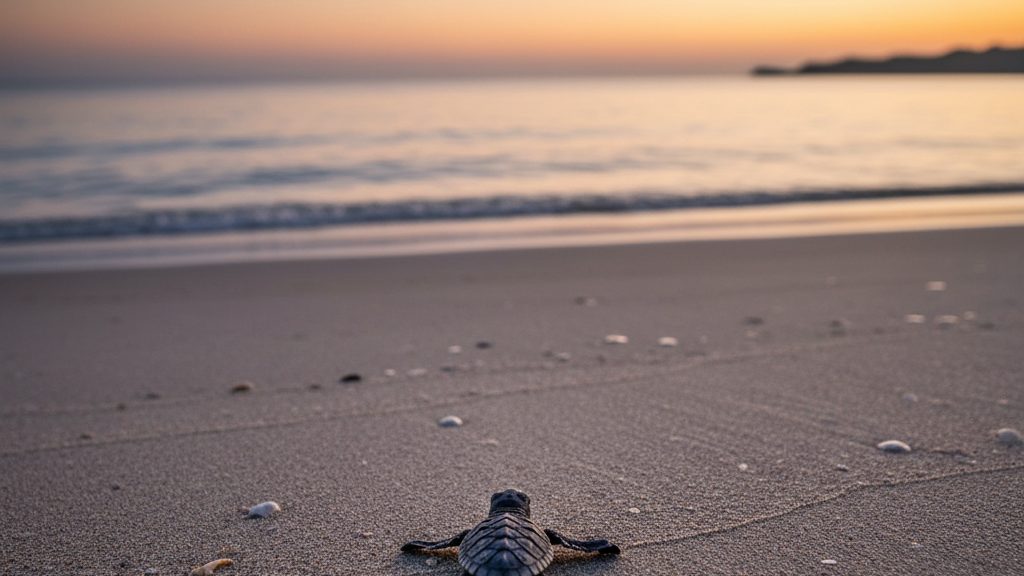
Sea turtles nest on land but live at sea, often traveling across entire ocean basins before returning to the beach where they hatched. That life history has persisted through deep time, relying on environmental cues most vertebrates never use. What follows traces how long they have been doing it, how they find their way, and how a warming world is already rewriting the sex of the next generation.
Already marine in the Early Cretaceous
[01] Desmatochelys padillai, a nearly complete fossil from Colombia’s Lower Cretaceous, lived more than 120 million years ago and is more than 25 million years older than any previously recognized exclusively marine chelonioid.
[02] Fossils of the large-bodied basal protostegid Bouliachelys suteri from Early Cretaceous Australia indicate that primitive sea turtles were already larger and more diverse than scientists had previously assumed.
[03] Turtles survived the asteroid impact 66 million years ago that extinguished non-avian dinosaurs, with analyses showing freshwater turtles, crocodylians and salamanders emerging from the Cretaceous–Paleogene boundary nearly unscathed.
Natal beaches written in the magnetic field
[04] Hatchling sea turtles imprint on the unique magnetic signature of their natal beach, produced by inclination angle and field intensity, then use those geomagnetic cues as adults to return home after migrations spanning entire ocean basins.
[05] When Florida loggerhead hatchlings were exposed to magnetic fields replicating those of three widely separated North Atlantic regions, they swam in directions that would keep them circling within the gyre on their first transoceanic migration.
[06] Sea turtle nesting density along coasts varies with slight changes in Earth’s magnetic field, and spatial magnetic differences between beaches strongly predict genetic differentiation among loggerhead nesting populations.
Warming sand and a shift toward daughters
[07] A temperature-dependent sex-determination model fitted to laboratory and field data for flatback turtles found a 29.4°C pivotal temperature for equal sexes and exclusively male hatchlings below 27.7°C.
[08] Genetic markers, mixed-stock analysis and laparoscopy showed green turtles from cooler southern Great Barrier Reef beaches already have a 65–69 percent female bias as warming feminizes one of the world’s largest populations.
[09] Incubation durations of more than 110,000 clutches of three sea turtle species in Florida declined significantly from 2001 to 2022, a shift researchers interpret as climate-driven feminization of hatchling sex ratios.
A lineage that swam through the asteroid winter now returns to beaches whose sand may produce only daughters.
[sources]
- https://www.pnas.org/doi/10.1073/pnas.0801859105
- https://www.sciencedirect.com/science/article/pii/S0960982214016388
- https://link.springer.com/article/10.1007/s00359-021-01529-8
- https://www.science.org/doi/10.1126/science.1064557
- https://www.sciencedirect.com/science/article/pii/S0960982214016388
- https://lohmannlab.web.unc.edu/wp-content/uploads/sites/8154/2019/03/2018_MagneticGenetics_BrothersLohmann_CB.pdf
- https://climatechangeresponses.biomedcentral.com/articles/10.1186/s40665-014-0003-3
- https://www.cell.com/current-biology/fulltext/S0960-9822(17)31539-7
- https://pmc.ncbi.nlm.nih.gov/articles/PMC12522085
- https://escholarship.org/content/qt147611bv/qt147611bv.pdf
- https://ocean.si.edu/ocean-life/reptiles/sea-turtles
- https://www.cambridge.org/core/journals/paleobiology/article/abs/turtle-species-extinction-across-the-cretaceouspaleogene-boundary/20C90D8313E1A9D37DAC43B669192AB6
- https://pmc.ncbi.nlm.nih.gov/articles/PMC9728968/
- https://www.science.org/doi/10.1126/science.1177265
- https://pmc.ncbi.nlm.nih.gov/articles/PMC1617175